
About HUL
Our Story
Areas of Work
HUL is in the long term committed to produce knowledge that enables action at various scales- from neighbourhoods to the regional and national scales. We turn our findings into tools for teaching and learning and initiating meaningful interventions. Our research transcends traditional research boundaries and takes the shape of advocacy, community engagement and solution building.
Our current work is focused on three thematic areas of urgent concern –
- Work and Employment : We are interested in questions of how people in the city make a living and the challenges they face. Whether it is a migrant worker working in a brick-kiln or a young woman in an IT company, we push to understand systems that help or deter life in the city.
- Learning and Education : Our research forms the backbone of our teachings. We curate courses based on insights and the expertise in the field. From skill based training such as GIS, and Writing, to theoretical and research based courses, we develop pedagogical tools for learners across academic disciplines.
- Climate Justice : Extreme weather events, slow onset disasters and uneven impacts of climate change require new theoretical and empirical frameworks to build resilient cities and safeguard populations. As part of this, we focus on issues of water, ecology, rising heat, climate risks and vulnerabilities, to provide policy solutions, strengthen communities, and build archives and networks.
Values
HUL is founded on three core values:
- Openness : We ensure transparency in all our operations, be it teaching, carrying out fieldwork, or building advocacy campaigns. This allows us to foster dialogue and build trust with all our stakeholders.
- Collaboration : We believe in the power of collaboration to create meaningful change. Our work is guided by insights, efforts, and inputs from stakeholders ranging from governmental bodies, local communities to academicians, students and artists. It defines our core being and allows us to engage deeply with the city and all its different facets.
- Entrepreneurship: We strive to keep up the spirit of innovation- being curious, asking questions, embracing multiple perspectives, and a never give up attitude! We invest in our passion for the urban which translates to unique perspectives and solutions to everyday challenges in the city.
HUL Board
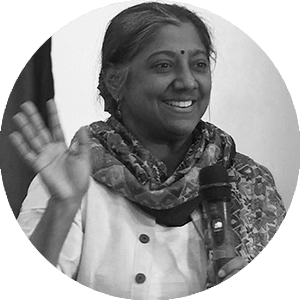
Bhashwati Sengupta
Director
At HUL, she leads the lab’s efforts to make urban knowledge accessible, grounded, and oriented toward action. She is particularly invested in supporting young people—especially women—through thoughtful mentorship, curatorial engagement, and the creation of nurturing learning environments. Her work combines close attention to everyday life with a sharp critical lens on structures of exclusion and possibility in the city.
Bhaswati curates HUL’s public conversations and supports projects that bring together memory, storytelling, and civic imagination. Her approach is collaborative, quiet, and meticulous. She focuses on building relationships of trust and fostering spaces where reflection and action can co-exist. As Director, she is committed to sustaining HUL’s ethos as a place where people come to ask questions, make sense of the city, and build capacity for collective transformation.

Prasad Shetty
Board Member
Prasad Shetty is an urbanist based in Mumbai. He has studied architecture (B-Arch, KRVIA, Mumbai University) and urban management (MA-Urban Management, Institute for Housing & Urban Development Studies, Rotterdam, the Netherlands). He is one of the founder members of the School of Environment and Architecture and currently works at the school as Professor and Dean. He is also one of the founder members of the Collective Research Initiative Trust urban research collective, which has been involved in urban research activities on the city of Mumbai.
Earlier he has worked with the MMRDA (Mumbai Metropolitan Region Development Authority), MMR – Heritage and Environment Society, Academy of Architecture and Kamla Raheja Institute for Architecture. He has also worked as a consulting urban management expert to the Town Administration of Mendefera, Eritrea; and an expert member to the Dadra–Nagar Haveli Planning & Development Authority. His work involves research and teaching on contemporary Indian urbanism with specific focus on architecture; cultural aspects of urban economy and property; housing; and entrepreneurial practices. He has a wide range of publications, and has exhibited his works / delivered lectures across the world.
Important Works:
- Urban Chronicles (Stories of Entrepreneurship, Ganga Building Chronicles, Bombay Talkies & Other Stories of Malad, Gurgaon Glossaries)
- Housing Studies (Housing Types in Mumbai, Slum Studies)
- Methods & Conceptualisations – (Glossaries, Semi-fictions, Settling, Transactional Capacities, Small Forces)
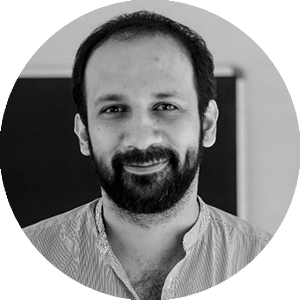
Dr. Gautam Bhan
Board Member
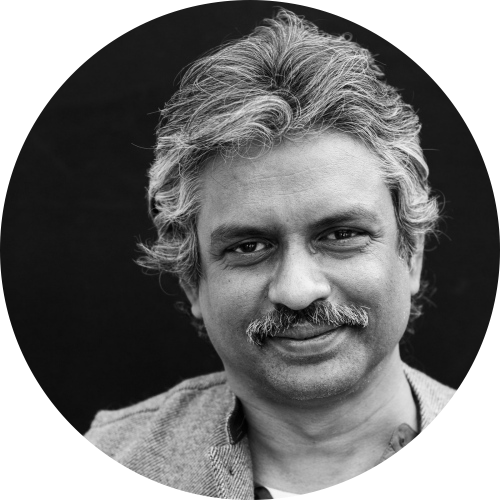
Dr. Anant Maringanti
Board Member
He trained as an engineer and later earned a PhD in Geography from the University of Minnesota. His career has moved across industrial design, visual communication, journalism, activism, and participatory research in Central India, before turning fully to urban geography. He has taught at the National University of Singapore, NALSAR University of Law, and the University of Hyderabad, and currently serves as Director of the Interdisciplinary Center for the Study of Global Change (ICGC) at the University of Minnesota.
HUL Team
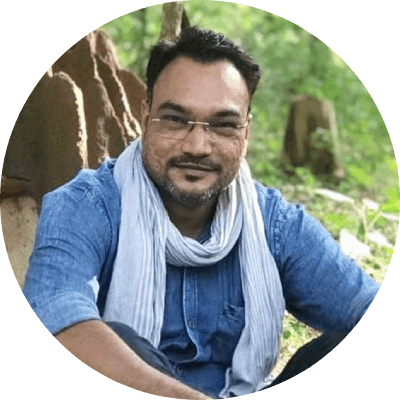
Masood
Masood Bio
Law graduate and social activist Masood has been associated with HUL for a long time. In recent years he has been assisting in HUL’s interventions on the ground and in marginalised communities.
As an independent practitioner he is familiar with most NGOs and Civil Society organisations in Hyderabad, that work in the spheres of rights of the disenfranchised, civil liberties, and social justice. He is also the co-founder of ASEEM and The Democracy Dialogue.
From an initial interest in preserving the city’s heritage, he has moved towards addressing civic issues, minority rights and community welfare.
Connecting people to resources and opportunities at the state level as well as at the level of Local Administration is his special forte. This year he has agreed to give a part of his work time to HUL. He will be leading the organisation’s action-based research programme and its engagement with at risk communities in the city.
He brings to the HUL table, an understanding of legal processes and legal action, public awareness, and a long-standing association with those that are engaged in public life across the country.
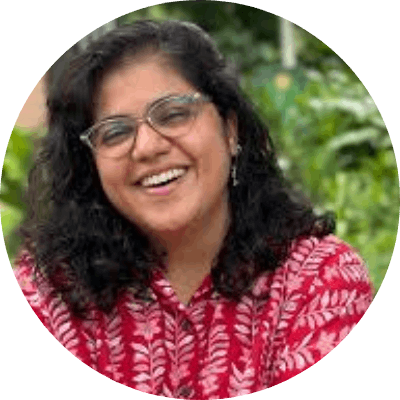
Vanshika Singh
Vanshika Bio
Her engagement with water began while documenting the labour of the city’s water linemen and has since expanded to examine the physical toll of climate change on the body—spikes in illness during erratic monsoons or the strain of water repair work. She hopes to set up an interdisciplinary Water and Waste Conservatory that will design equity driven preparedness and response to risk, and engage with places and policies across contexts.
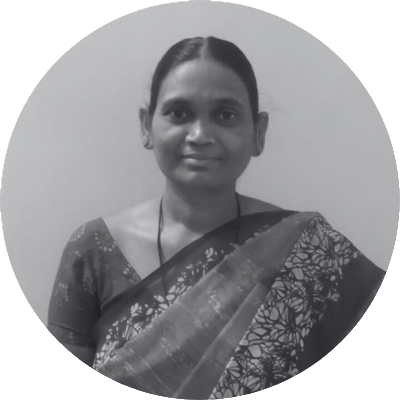
Lakshmi
Housekeeping
Lakshmi Bio
Lakshmi is responsible for the upkeep of a clean and hygienic work space.
Friends & Advisors
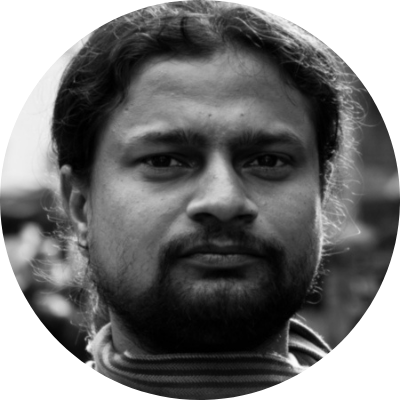
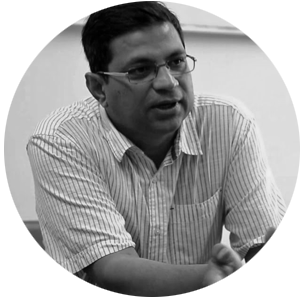
Swastik Harish
Associate Director
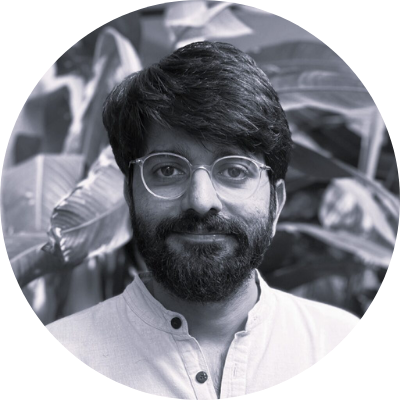
Teja Malladi
Associate Director
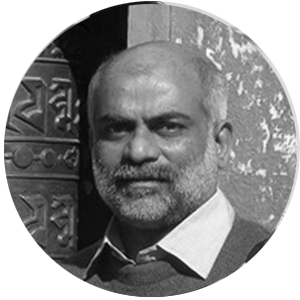
Ashhar Farhan
Technologist and Entrepreneur, Co-Founder of Lamakaan

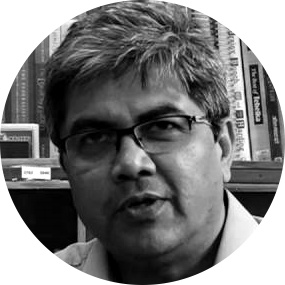
Bharat Bhushan
Development Professional
Funding & Legal Status

The finances of Hyderabad Urban Lab come from personal contributions, income from paid services and loans from well-wishers.
Hyderabad Urban Lab Foundation is registered in India under Section 8 of Companies Act 2013.
Date of Incorporation: June 21, 2016
CIN: U85300TG2016NPL110410
Tax Exemption: Accorded in June 2018 by the Dept of IT, GOI
Registered Address: Hyderabad Urban Lab, First Floor, Gulshan E Khaleel, 10-5-7/1 First Lancer Road, Masab Tank, Hyderabad, Telangana State.
HUL: A Safe Space
Sexual harassment is conduct that may be reasonably perceived by the victim as sexually unwelcome, and includes any one or more of the following acts or behaviour (whether directly or by implication):
- Unwelcome acts of physical intimacy;
- Requests for sexual favours;
- Making sexually coloured remarks;
- Showing pornography
- Any other unwelcome physical, verbal or non-verbal conduct of sexual nature, including:
i. Implied or overt promise of preferential treatment in employment;
ii. Implied or overt threat of detrimental treatment in employment;
iii. Implied or overt threat about present or future employment status;
iv. Conduct of any person which interferes with work;
v. Creating an intimidating or offensive or hostile work environment;
vi. Humiliating conduct constituting health and safety problems.
HUL recognises that sexual harassment may be experienced by any individual, irrespective of their gender identity or sexual orientation.
Inebriation is not a defence for engaging in any conduct that amounts to sexual harassment.
HUL has a clear policy for dealing with any reported instances of sexual harassment, including internal disciplinary measures as well as initiating appropriate legal action. HUL has constituted an Internal Complaints Committee or ICC under section 4 of the Sexual Harassment of Women at Workplace (Prevention, Prohibition And Redressal) Act, 2013. See the list of ICC members below.
Members
Anant Maringanti,
Director, HULF
amaringanti@gmail.com
Mahnoor Yarkhan,
Drama therapist – children in conflict
hakifadi2000@yahoo.com
Tashi Choedup,
Independent Consultant and Researcher
tashi.choedup18@gmail.com